使用CodeQL挖掘Spring中的大量赋值漏洞
什么是大量赋值漏洞(Mass Assignment Vulnerability)
或许你没有听过“大量赋值漏洞”,但你一定在网络上见过这样的技巧:FUZZ请求参数的额外字段。比如:
- 在某个获取用户列表的请求中,如
/api/user?name=ad&orderby=id,可以尝试 FUZZ SQL关键字,例如:/api/user?name=ad&orderby=id&sort=desc,1/0&limit=0,1 PROCEDURE ANALYSE(..),可能发现潜在注入点; - 在注册账号场景中,可以尝试 FUZZ 内部字段,如设置用户身份的字段
role=admin、isAdmin=true等,测试是否能意外获得管理员权限。
以上漏洞都存在一个共同点,即后端接收了这些本不应暴露给用户的字段,并进行了处理。而本文讨论的大量赋值漏洞,则是在此基础上的一个特殊案例。
大量赋值(Mass Assignment)是指,后端为了简化开发流程,自动将请求参数绑定到后端对象的属性上。但是,如果开发者没有限制哪些字段可以被赋值,攻击者就可能构造请求参数,注入原本不应由用户控制的敏感字段。如果后端接受并处理了这些敏感字段,则会引发一系列安全问题,也就是所谓的大量赋值漏洞(Mass Assignment Vulnerability)。
Spring中的大量赋值
Spring Framework 是一个开源的 Java 应用程序开发框架,最初由 Rod Johnson 于 2003 年发布。它以其轻量级、模块化和强大的依赖注入(DI)与面向切面编程(AOP)特性而广受欢迎,尤其在 Java Web 开发中。
在 Web 开发中,Spring 提供了强大的请求映射与参数处理机制,其中使用最多的为@RequestBody 注解。该注解能够将 HTTP 请求体中的 JSON、XML 等结构化数据反序列化为 Java 对象,并绑定到控制器方法的参数中。这种自动映射的机制极大地简化了数据解析与对象构造的过程。然而,正是这种便捷性,也可能在不经意间引入安全隐患:如果未对绑定对象的字段进行严格控制,攻击者便可以利用 @RequestBody 自动赋值的特性,向对象注入敏感字段,进而引发大量赋值漏洞。
接下来让我们通过一段示例代码,逐步分析这一漏洞的形成过程及其利用方式:
在某一应用程序中,存在一个用户注册功能。该程序中通过User类, 定义了一个简单的 “用户” 数据模型,其代码如下:
// User.java
public class User{

    private String name;

    private String password;

    private String role;

    public void setName(String name){
        this.name = name;
    }
    ... Getters and Setters
}
现有以下路由代码,用于处理前端发起的用户注册请求,该请求直接使用 @RequestBody注解, 将用户的POST传参解析为 User 类型参数,随后直接通过 service层 保存在数据库中:
@RequestMapping("/user")
public class UserController {

    @Autowired
    private UserService userService;

    @PostMapping("/register")
    public ResponseEntity<User> register(@RequestBody User newUser) {
        userService.save(newUser);
        return ResponseEntity.ok(newUser);
    }
}
User表对应的建表语句如下,可以看到其中的role字段默认为user :
CREATE TABLE `litemall_user` (
  `id` int(11) NOT NULL AUTO_INCREMENT,
  `username` varchar(63) NOT NULL COMMENT '用户名称',
  `password` varchar(63) NOT NULL DEFAULT '' COMMENT '用户密码',
  `role` varchar(63) NOT NULL DEFAULT 'user' COMMENT '用户角色',
  )
现在让我们来看看前端是如何发起注册请求的,代码如下. 在前端代码中,**没有显示声明 role字段内容,**因此正常注册的用户应该是普通权限.
// api.js
export function register(username, password) {
  const endpoint = `${baseurl}/user/register`;
  const payload = {
    name: username,
    password: password
  };

  return axios.post(endpoint, payload, {
    headers: {
      'Content-Type': 'application/json'
    }
  });
}
然而由于 @RequestBody 会将请求体中字段自动绑定到 User 对象的每个属性上,而后端未对 role 字段做任何限制。因此,若攻击者成功FUZZ出该字段或者通过源码审计发现出该处存在绑定问题,这将导致攻击者成功注册为管理员用户。
如何修复?
很简单,如果用户权限只能由管理员设置,我们只需要在调用 userService.save()前,手动设置 role 为 "user":
@PostMapping("/register")
public ResponseEntity<User> register(@RequestBody User newUser) {
    newUser.setRole("user");
    userService.save(newUser);
    return ResponseEntity.ok(newUser);
}
我的CodeQL探索之旅:如何发现CVE-2025-6702
上一章节我们演示了Spring中的大量赋值漏洞案例:后端通过 @RequestBody自动绑定了客户端传入的数据对象,但未对敏感字段(如 role)进行显式设置或校验,从而导致攻击者可以设置敏感参数实现权限提升。
本章节中,我将使用真实案例,揭示我是如何使用CodeQL发现CVE-2025-6702。首选需要明确任务,即:通过CodeQL,找到使用 @RequestBody 解析传入参数,且对应路由函数里未对相关字段使用 setter方法进行显示赋值。
进一步的,可将目标拆解为以下三个步骤:
- 查找使用
@RequestBody注解的参数 - 在 步骤1 的基础上,需要满足该参数类型为指定的数据结构
- 在 步骤2 的基础上,检测该参数 未使用显式调用 setter 方法进行字段赋值
查找使用@RequestBody注解的参数
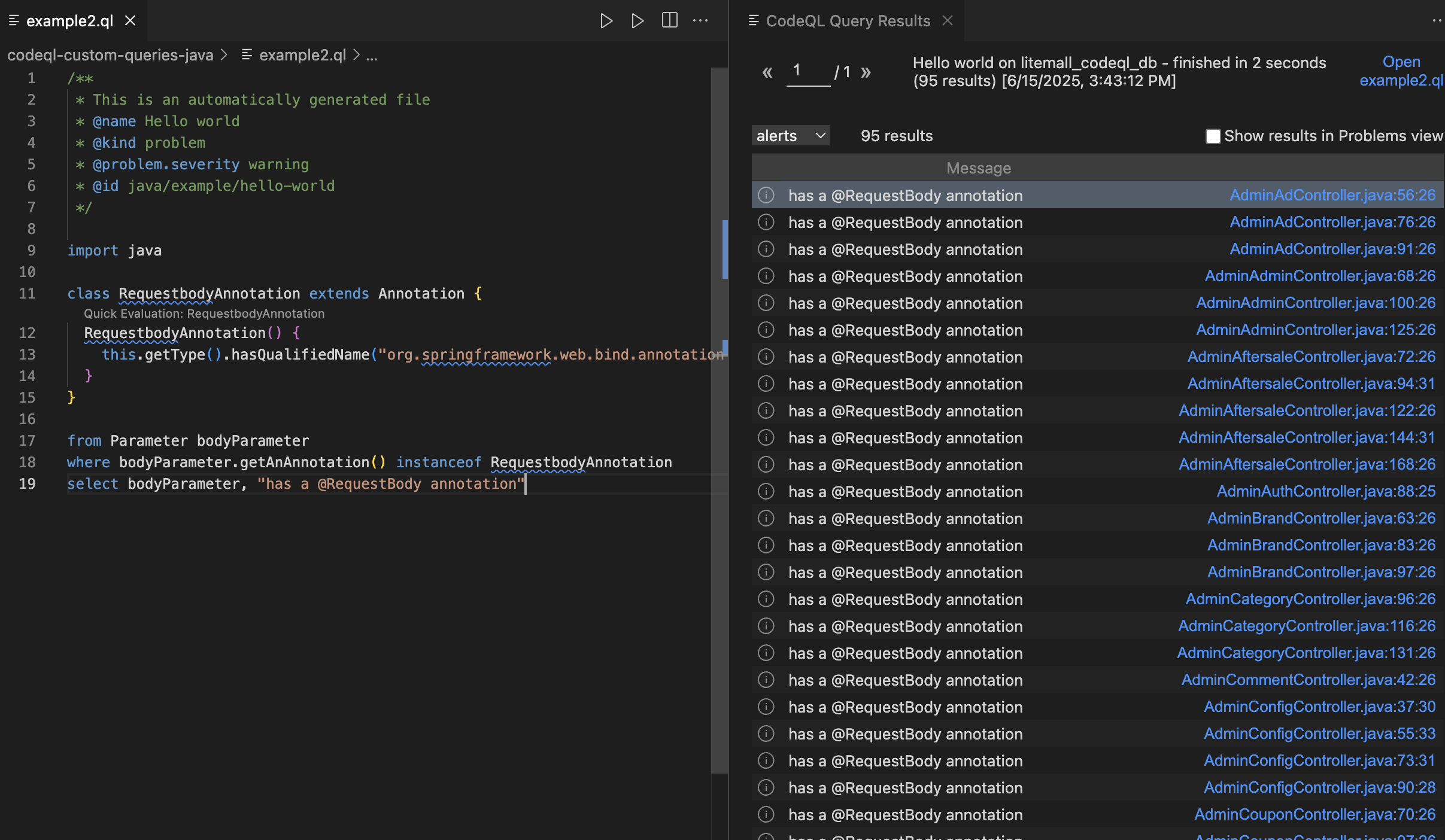
参照官方annotations-in-java案例,很容易查找到使用 @RequestBody作为注解的参数:
/**
 * This is an automatically generated file
 * @name Hello world
 * @kind problem
 * @problem.severity warning
 * @id java/example/hello-world
 */

import java

class RequestbodyAnnotation extends Annotation {
  RequestbodyAnnotation() {
    this.getType().hasQualifiedName("org.springframework.web.bind.annotation", "RequestBody")
  }
}

from Parameter bodyParameter
where bodyParameter.getAnAnnotation() instanceof RequestbodyAnnotation
select bodyParameter, "has a @RequestBody annotation"
参数类型为指定的数据结构
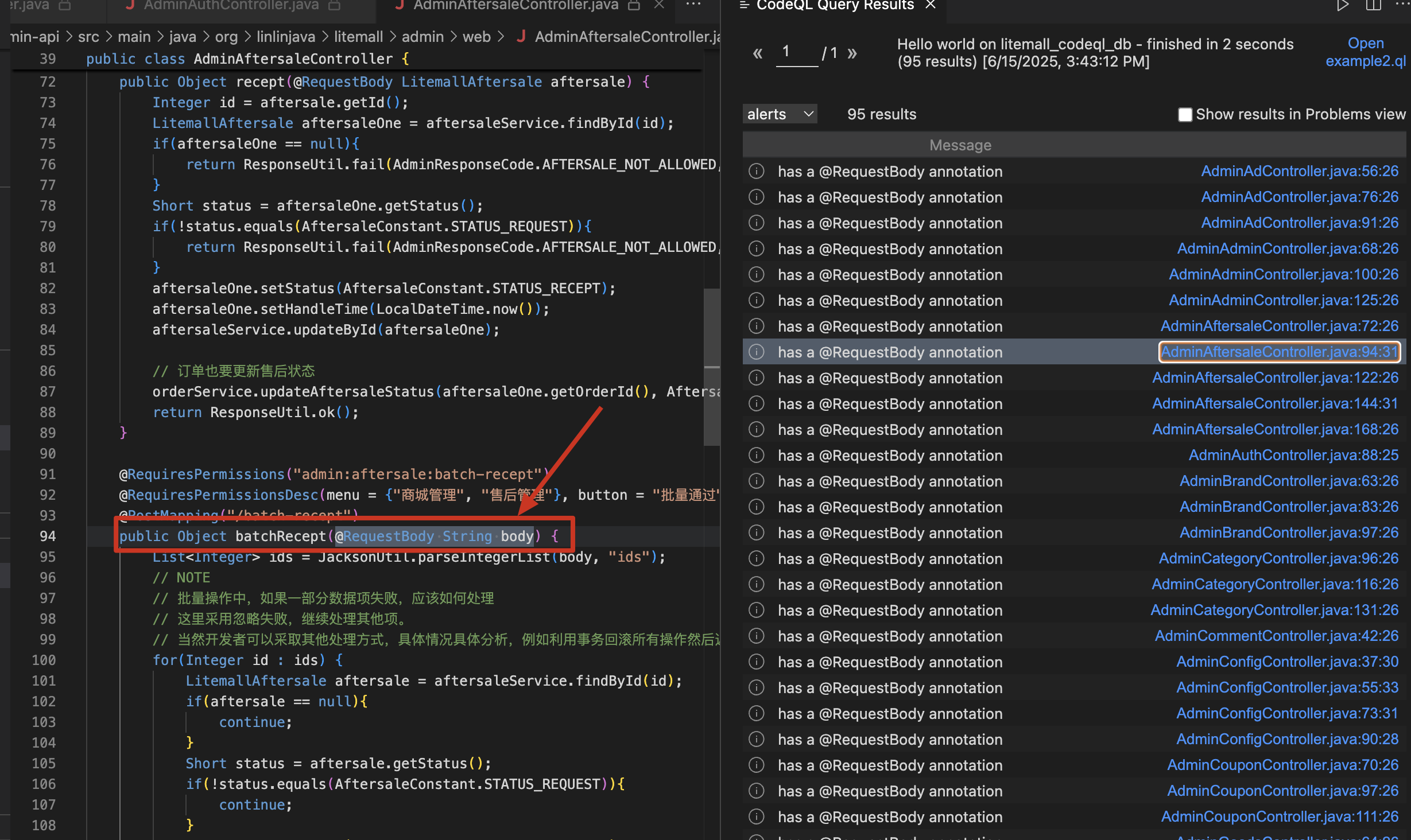
通过对上一步查询结果的观察,发现存在非绑定类型的参数,如:String 类型。
因此我们需要进一步筛选出符合自动绑定类型的参数。
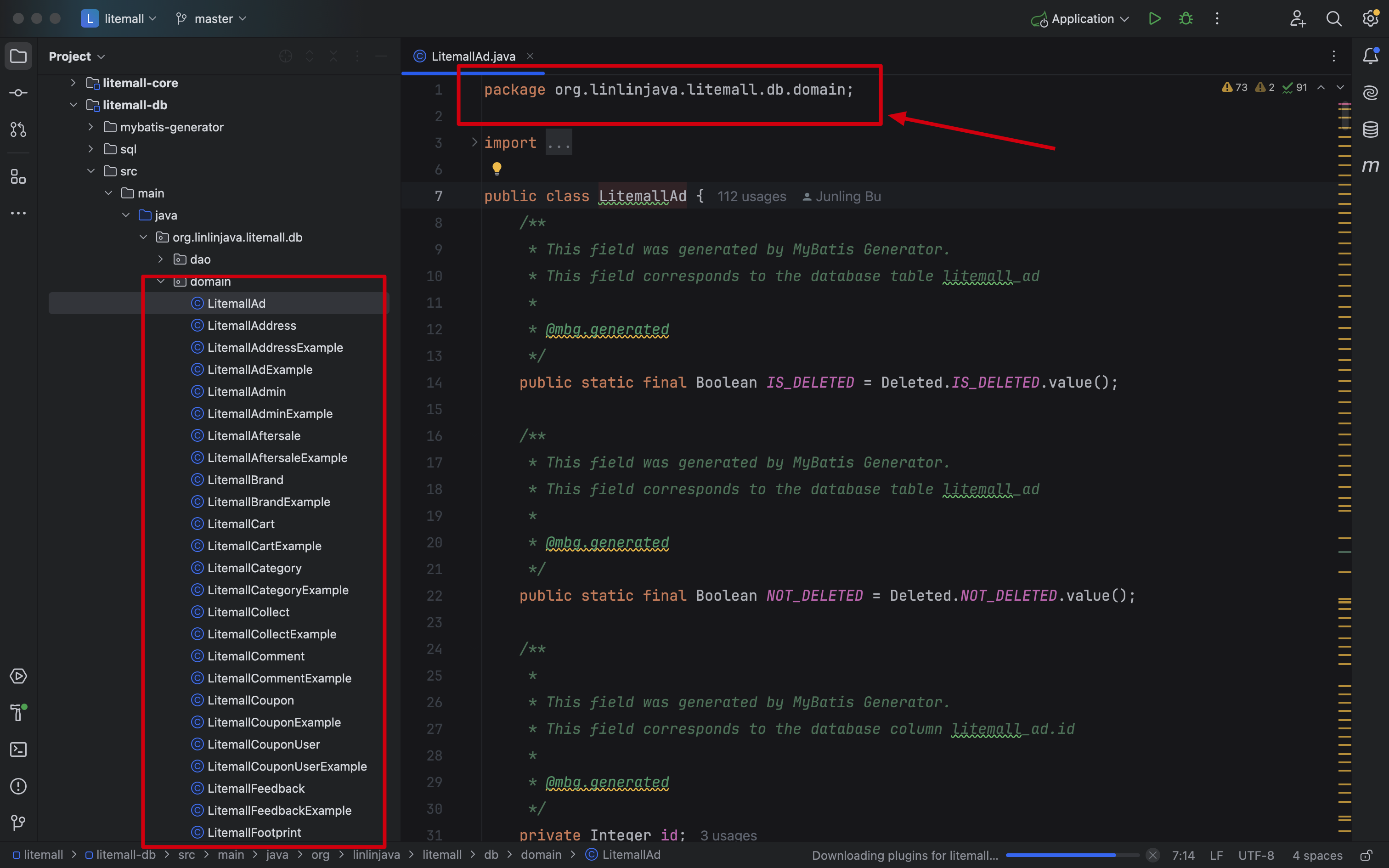
通过阅读源码,发现该项目相关的绑定参数定义在 org.linlinjava.litemall.db.domain包下,且都符合LitemallXXX的命名格式,因此定义如下一个谓词进行过滤:
predicate daoClass(Class c) {
  c.getPackage().getName() = "org.linlinjava.litemall.db.domain" and
  c.getName().matches("Litemall%")
}
对应的where 语句更新为:
from Parameter bodyParameter
where bodyParameter.getAnAnnotation() instanceof RequestbodyAnnotation and
daoClass(bodyParameter.getType())
select bodyParameter, "has a @RequestBody annotation"
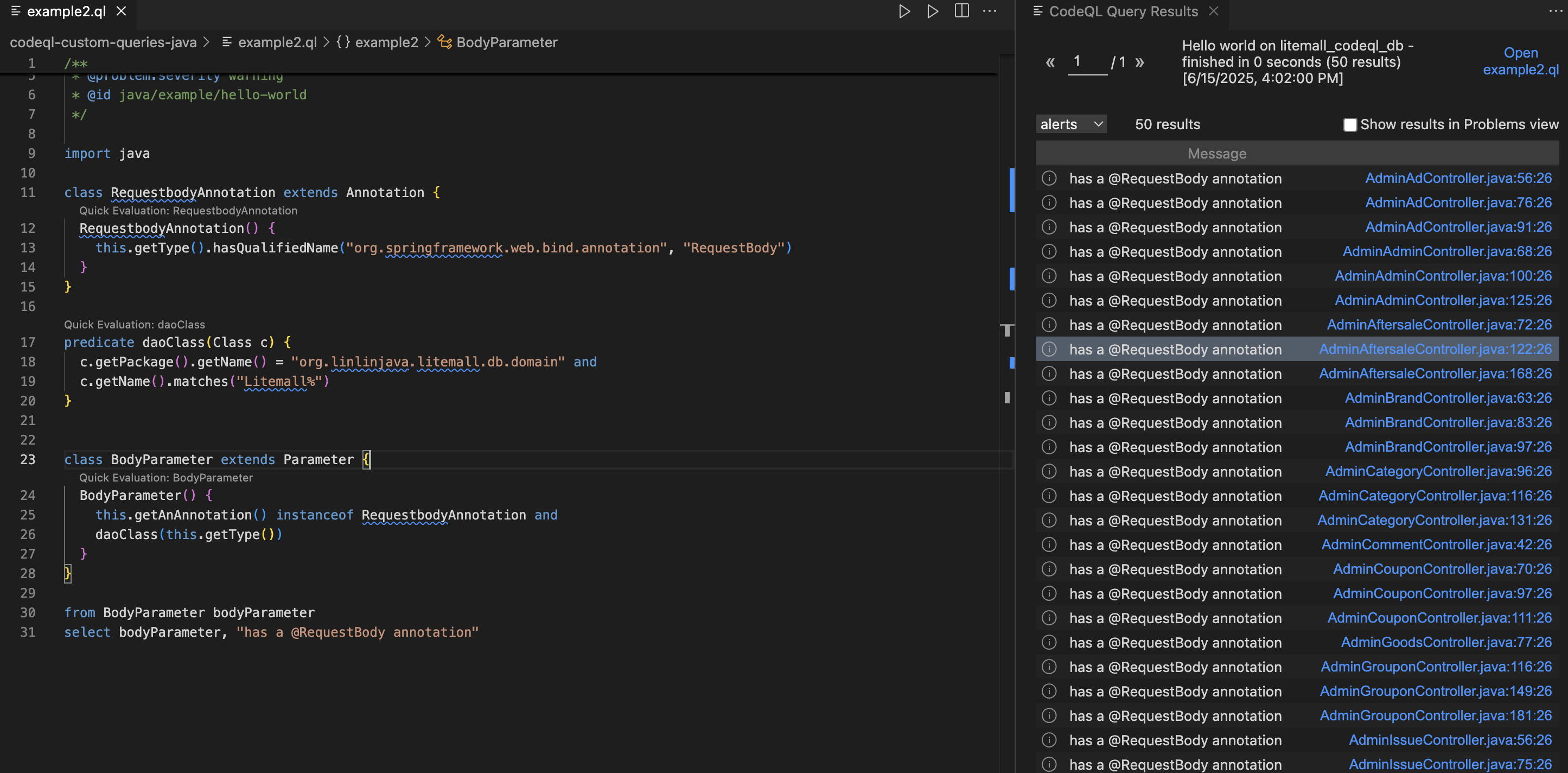
为了方便,将上面的代码进行整合,重新定义一个 BodyParameter 类,用来获取所有满足前两个步骤的请求参数:
class BodyParameter extends Parameter {
  BodyParameter() {
    this.getAnAnnotation() instanceof RequestbodyAnnotation and
    daoClass(this.getType())
  }
}
未显式调用的setter方法
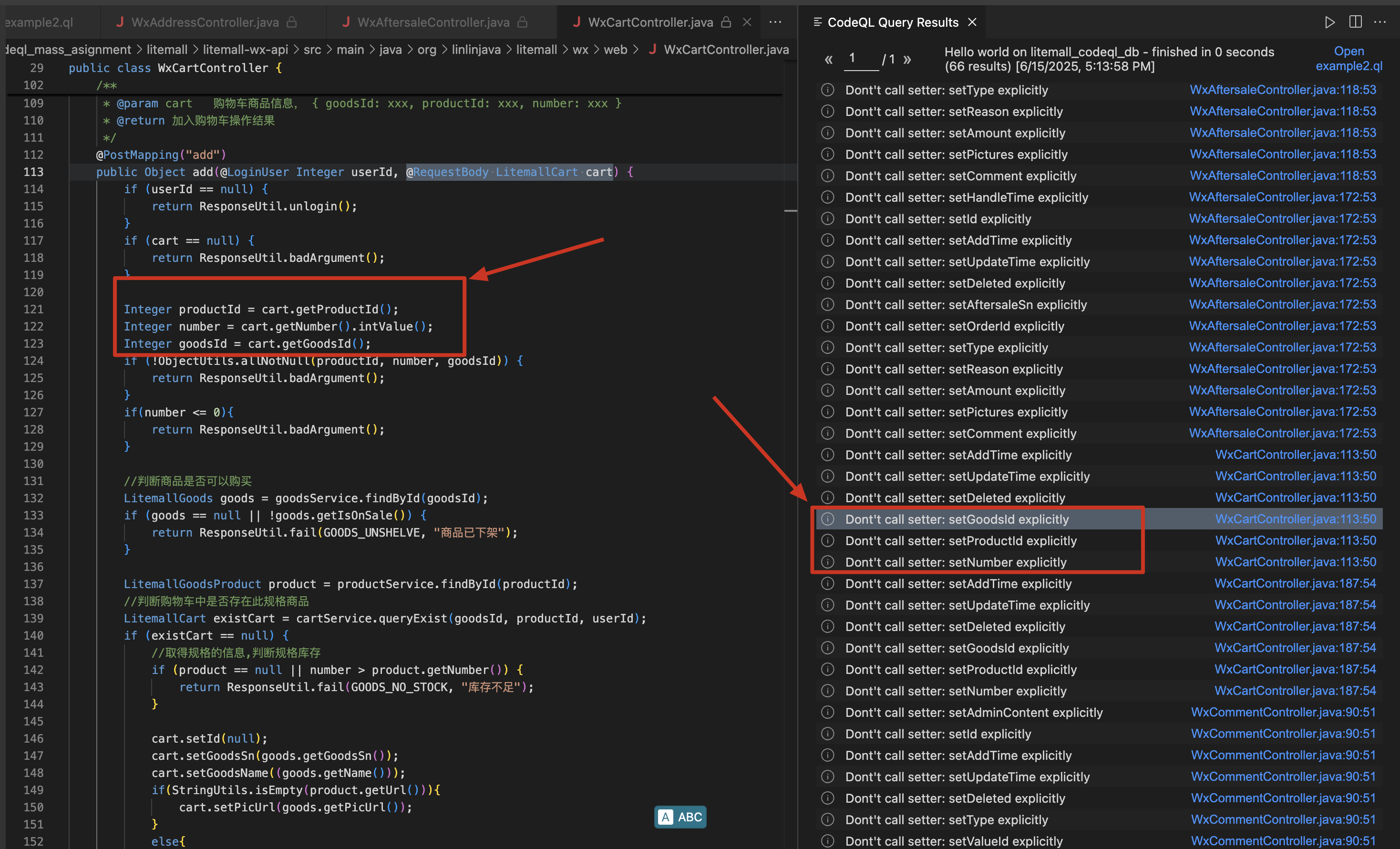
以WxCartController.java:113:50为例,可以看到在add 路由下, 该函数通过一系列的setter 方法显示设置字段值,最后调用 cartService.add(cart) 进行Service层的业务逻辑处理。因此如果能够找到未被显式调用的 setter方法,就可能发现潜在的大量赋值漏洞。
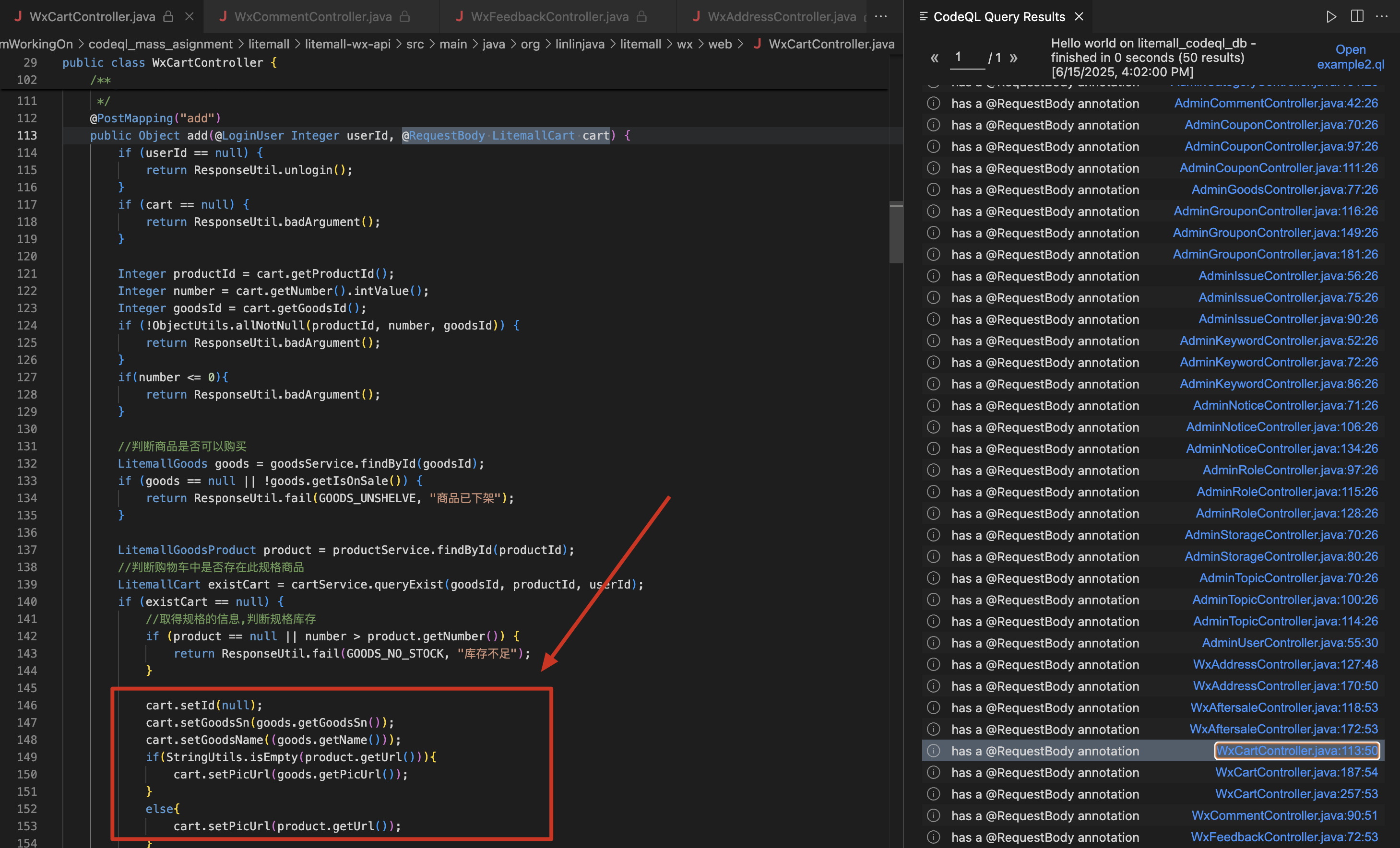
为了需要找到大量赋值类对应的 setter方法,作者定义了SetterMethod类,如下:
class SetterMethod extends Method {
  SetterMethod() {
    exists(Class c |
      daoClass(c) and
      this.getDeclaringType() = c and
      this.isPublic() and
      this.getName().regexpMatch("set.*") and
      this.getNumberOfParameters() = 1
    )
  }
}
该类主要依据 setter 方法特征的如下三个特征进行过滤:
- public 方法
- 方法名称格式为setXxx
- setter方法只拥有一个参数
现在来完善 from-where-select 语句,用来查询所有未被显式调用的setter方法:
from SetterMethod allSetterMethods, BodyParameter requestBodyParam
where
  requestBodyParam.getType() = allSetterMethods.getDeclaringType() and
  not exists(MethodCall explicitCall |
    explicitCall.getCallee() = allSetterMethods and
    explicitCall.getQualifier().(VarAccess).getVariable() = requestBodyParam
  )
select requestBodyParam, "Dont't call setter: " + allSetterMethods.getName() + "explicitly"
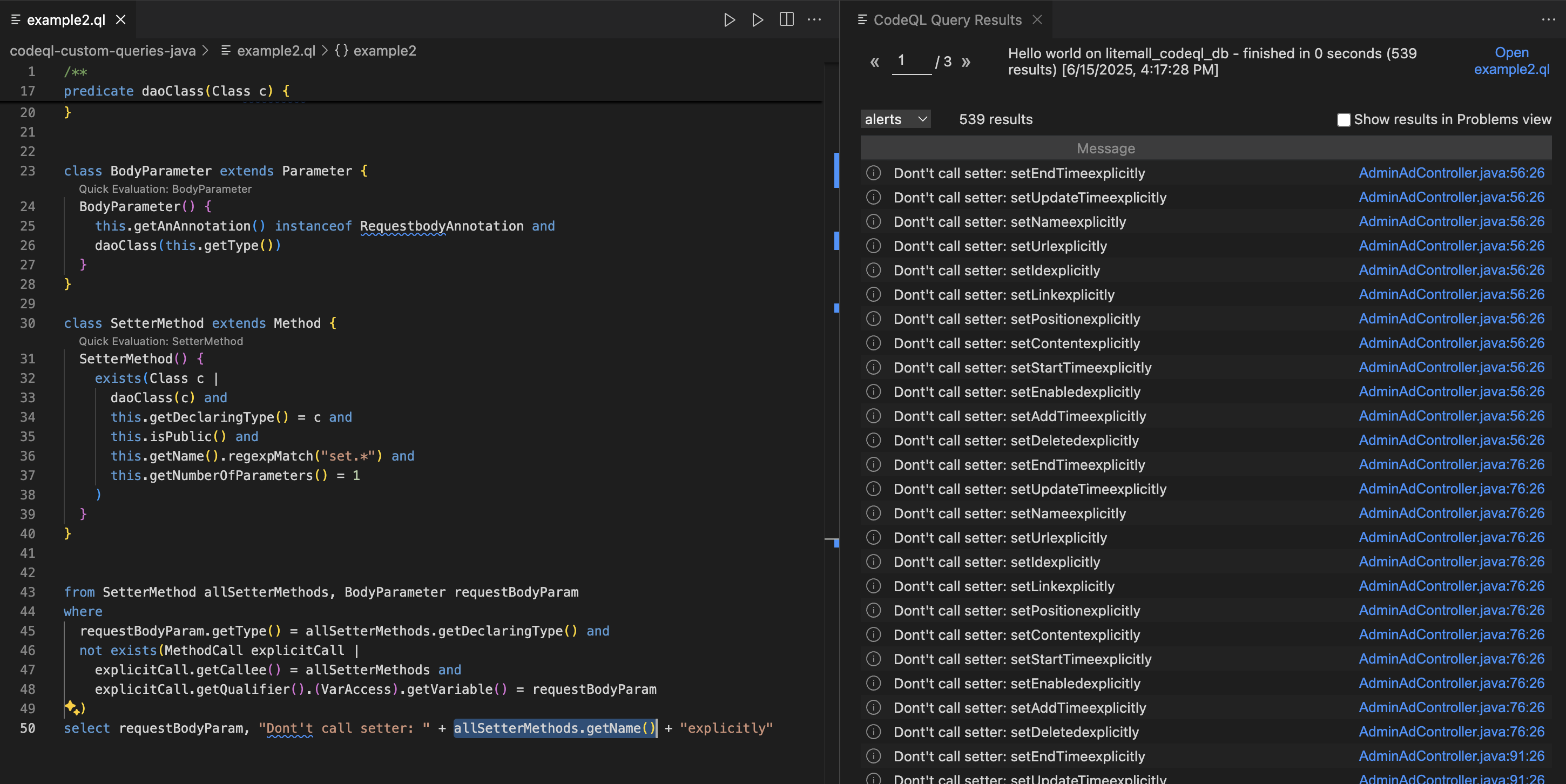
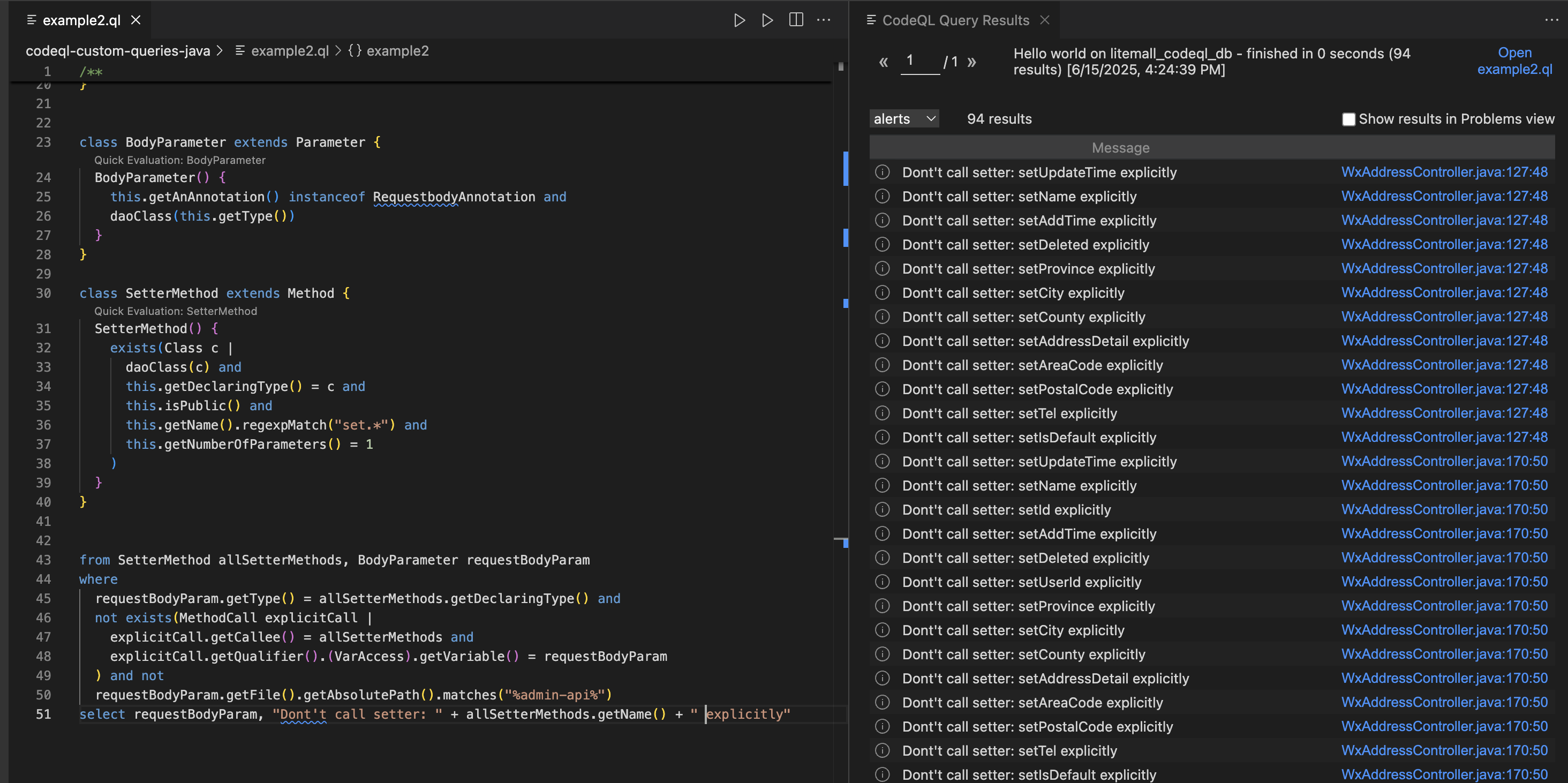
执行查询语句,会发现得到了大量结果。由于只考虑用户侧可控的参数和请求,因此可以限定普通用户可访问的api来进行进一步过滤,如下,结果从539条减少到了94条.
变量传递优化
截止目前,已经完成了之前的所有任务,现在来浏览一下是否存在有趣的setter方法未被显式调用吧。通过浏览查询结果, setPrice引起了我的关注。嗯? 难道我们找到了一个未显式设置商品价格的参数?让我们来进一步确认:
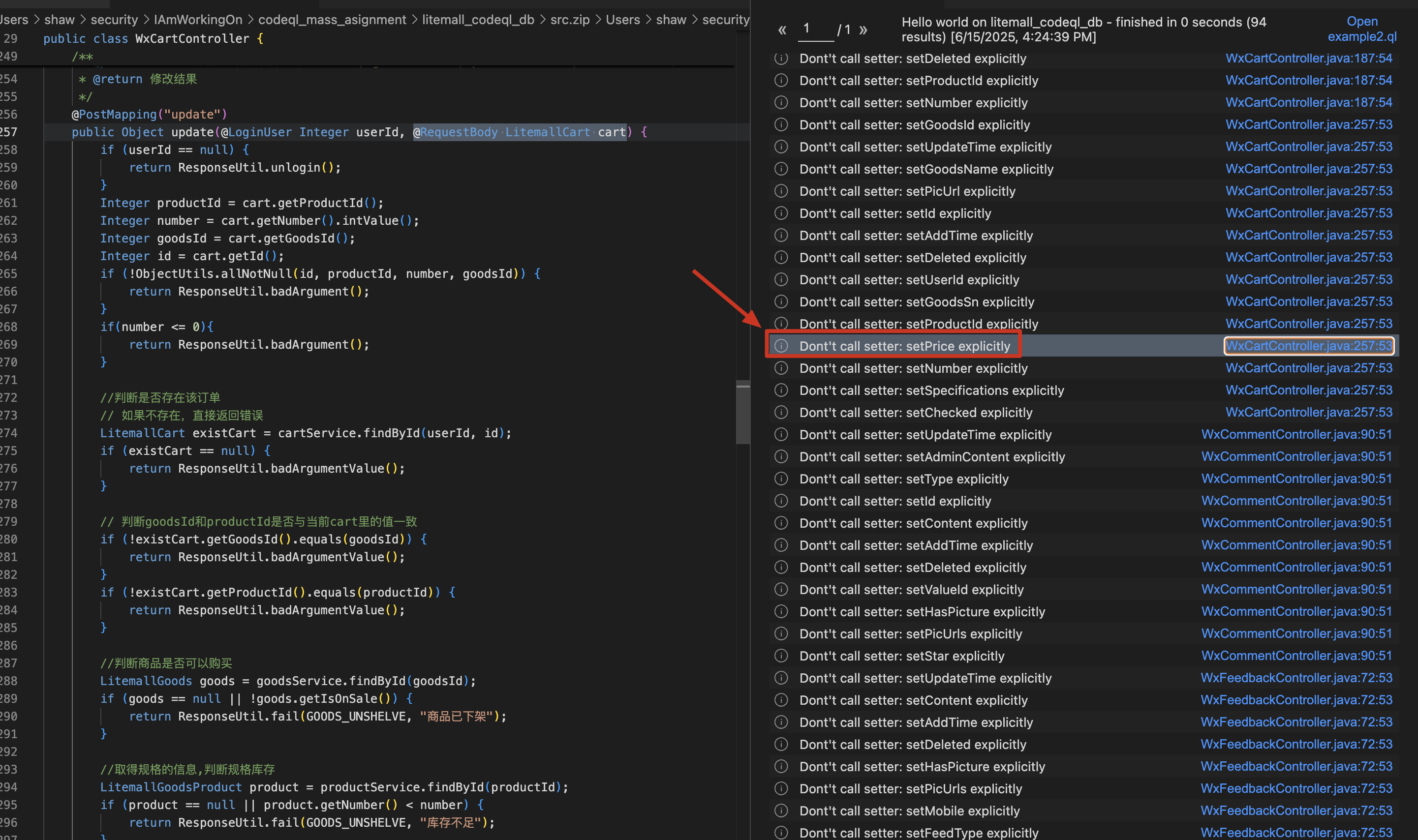
点击右侧蓝色字体,编辑器跳转到对应参数的代码片段.通过阅读代码后发现,这段代码确实没有显式调用 setPirce设置商品价格,但是这段代码压根儿就没有处理我们传入的cart参数.
因此,我们需要在此处进一步优化查询逻辑,使得通过@RequestBody传入的参数,传入到了service层进行处理。这并不复杂,通过本地数据流就能满足我们的需求.不过在构造where语句前,先定义下 serviceClass,用于查找 service层的数据结构:
predicate serviceClass(Class c) {
  c.getPackage().getName() = "org.linlinjava.litemall.db.service" and
  c.getName().matches("%Service")
}
接着完善from-where-select语句:
import semmle.code.java.dataflow.DataFlow

from SetterMethod allSetterMethods, BodyParameter requestBodyParam
where
  requestBodyParam.getType() = allSetterMethods.getDeclaringType() and
  not exists(MethodCall explicitCall |
    explicitCall.getCallee() = allSetterMethods and
    explicitCall.getQualifier().(VarAccess).getVariable() = requestBodyParam
  ) and
  exists(MethodCall call |
    serviceClass(call.getQualifier().(VarAccess).getVariable().getType()) and
    DataFlow::localFlow(DataFlow::parameterNode(requestBodyParam),
      DataFlow::exprNode(call.getAnArgument()))
  ) and
  not requestBodyParam.getFile().getAbsolutePath().matches("%admin-api%")
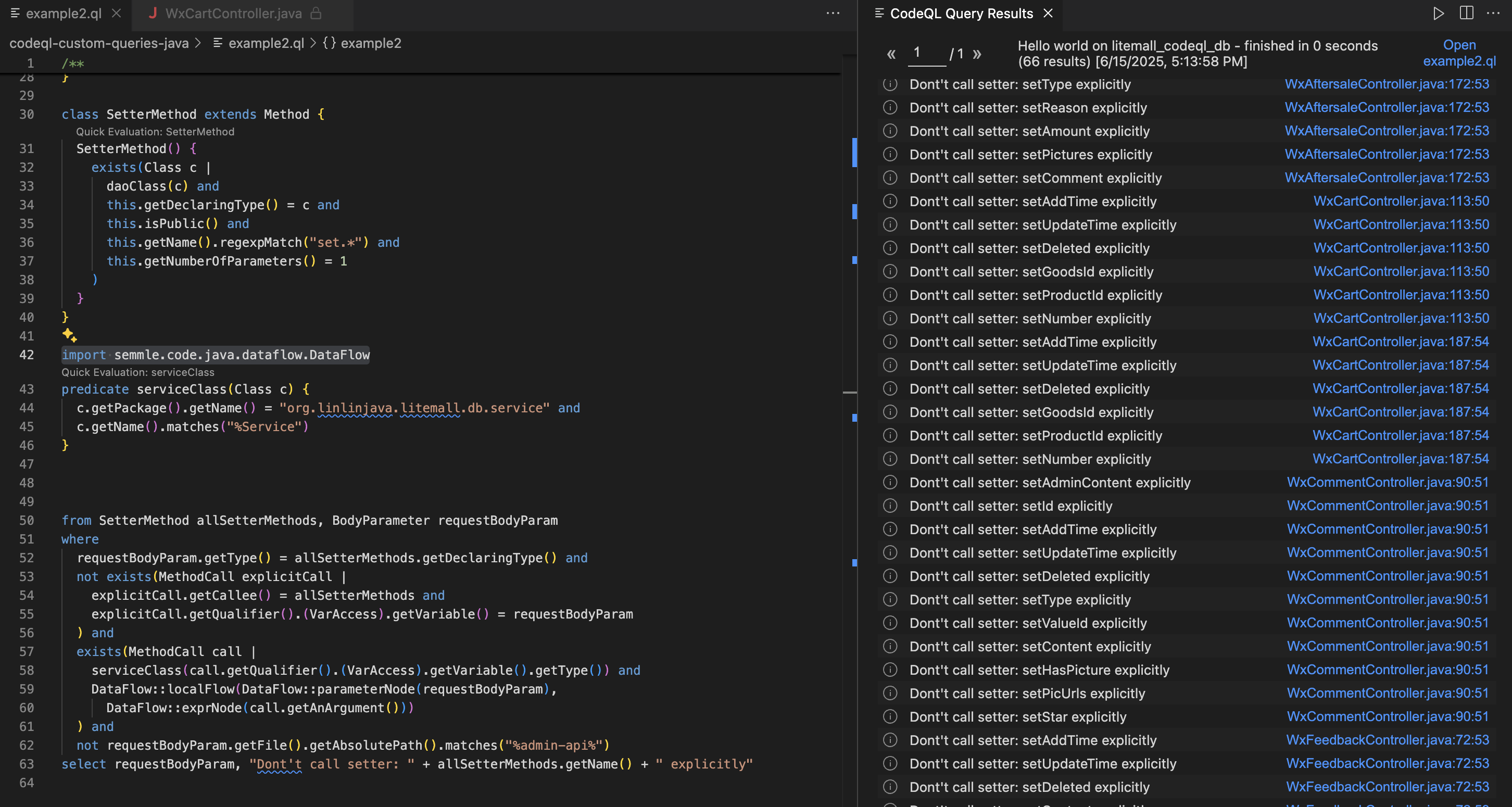
select requestBodyParam, "Dont't call setter: " + allSetterMethods.getName() + " explicitly"
注意:由于优化的查询语句中使用到了数据流分析,因此需要导入相关模块: semmle.code.java.dataflow.DataFlow
执行查询,此时的查询结果从 94条 减少到了 66条。
getter也算显式调用
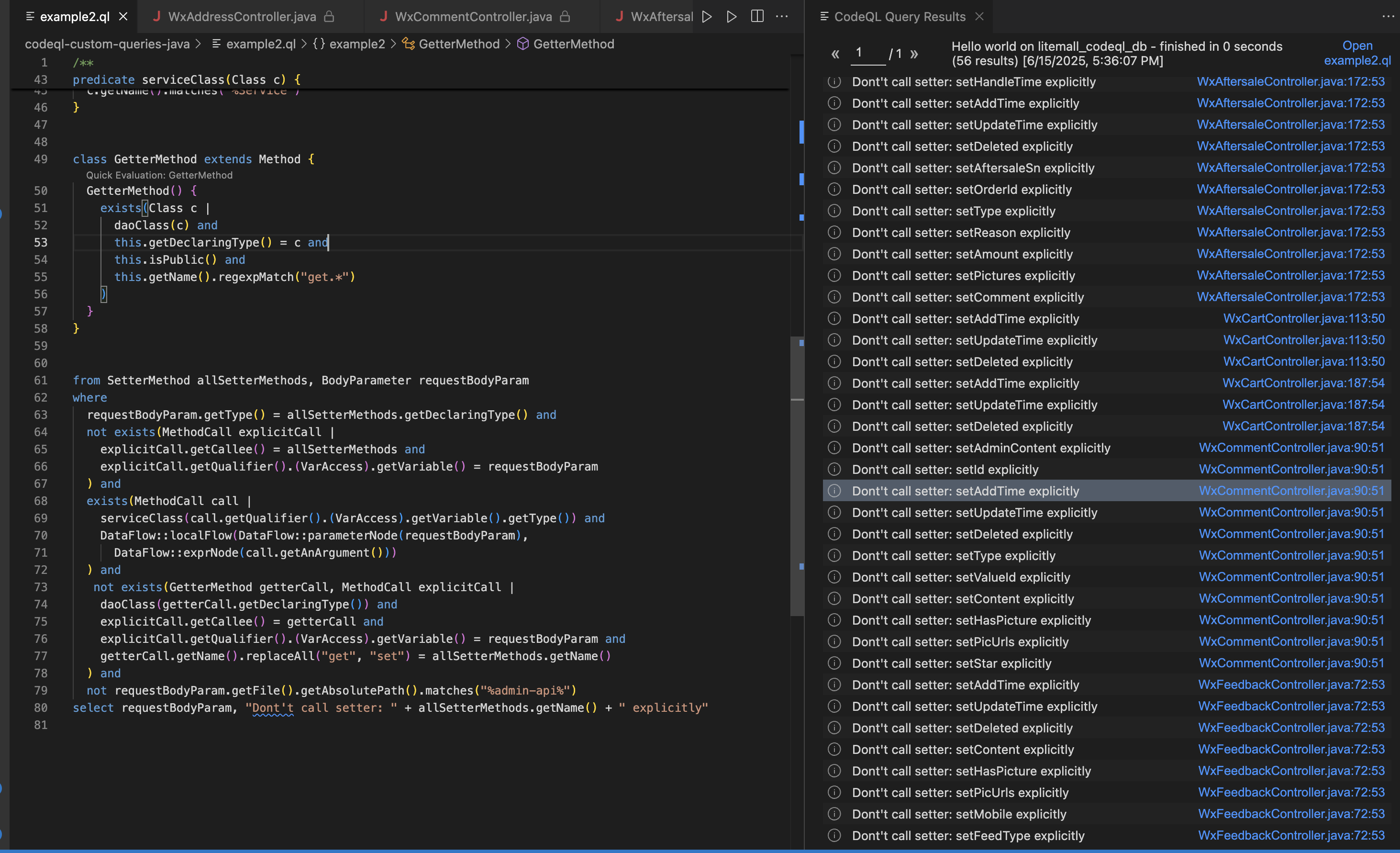
继续浏览查询结果,又发现一个问题:虽然有些参数没用使用setter函数进行赋值处理,但是使用了getter函数获取对应的值.显然此时应该认为该参数为系统期望输入。因此我们需要过滤掉使用getter函数对应的setter函数。
如何才能满足上诉需求?作者采用了一种最为直观的方法,将getter方法变为setter方法。在优化where条件之前,先定义所有的setter方法:
class GetterMethod extends Method {
  GetterMethod() {
    exists(Class c |
      daoClass(c) and
      this.getDeclaringType() = c and
      this.isPublic() and
      this.getName().regexpMatch("get.*")
    )
  }
}
接着使用replaceAll("get", "set")将对应的getter方法转为setter方法,如下:
from SetterMethod allSetterMethods, BodyParameter requestBodyParam
where
  requestBodyParam.getType() = allSetterMethods.getDeclaringType() and
  not exists(MethodCall explicitCall |
    explicitCall.getCallee() = allSetterMethods and
    explicitCall.getQualifier().(VarAccess).getVariable() = requestBodyParam
  ) and
  exists(MethodCall call |
    serviceClass(call.getQualifier().(VarAccess).getVariable().getType()) and
    DataFlow::localFlow(DataFlow::parameterNode(requestBodyParam),
      DataFlow::exprNode(call.getAnArgument()))
  ) and
   not exists(GetterMethod getterCall, MethodCall explicitCall |
    daoClass(getterCall.getDeclaringType()) and
    explicitCall.getCallee() = getterCall and
    explicitCall.getQualifier().(VarAccess).getVariable() = requestBodyParam and
    getterCall.getName().replaceAll("get", "set") = allSetterMethods.getName()
  ) and
  not requestBodyParam.getFile().getAbsolutePath().matches("%admin-api%")
select requestBodyParam, "Dont't call setter: " + allSetterMethods.getName() + " explicitly"
此时,结果从 66 条减少到了 56 条。
发现漏洞!
来感受下逐步优化查询语句后的成果吧。浏览查询结果过程中, setAdminContent 未被显式调用引起了我的关注。根据建表语句,发现该字段为“管理员回复内容”。最后经过测试,发现该接口存在大量赋值漏洞。如果你想查看漏洞细节,可以前往这里:https://ctf-n0el4kls.notion.site/Litemall-Mass-Assignment-Vulnerability-in-wx-comment-post-21441990f447808b86d1cb15e37ecae9
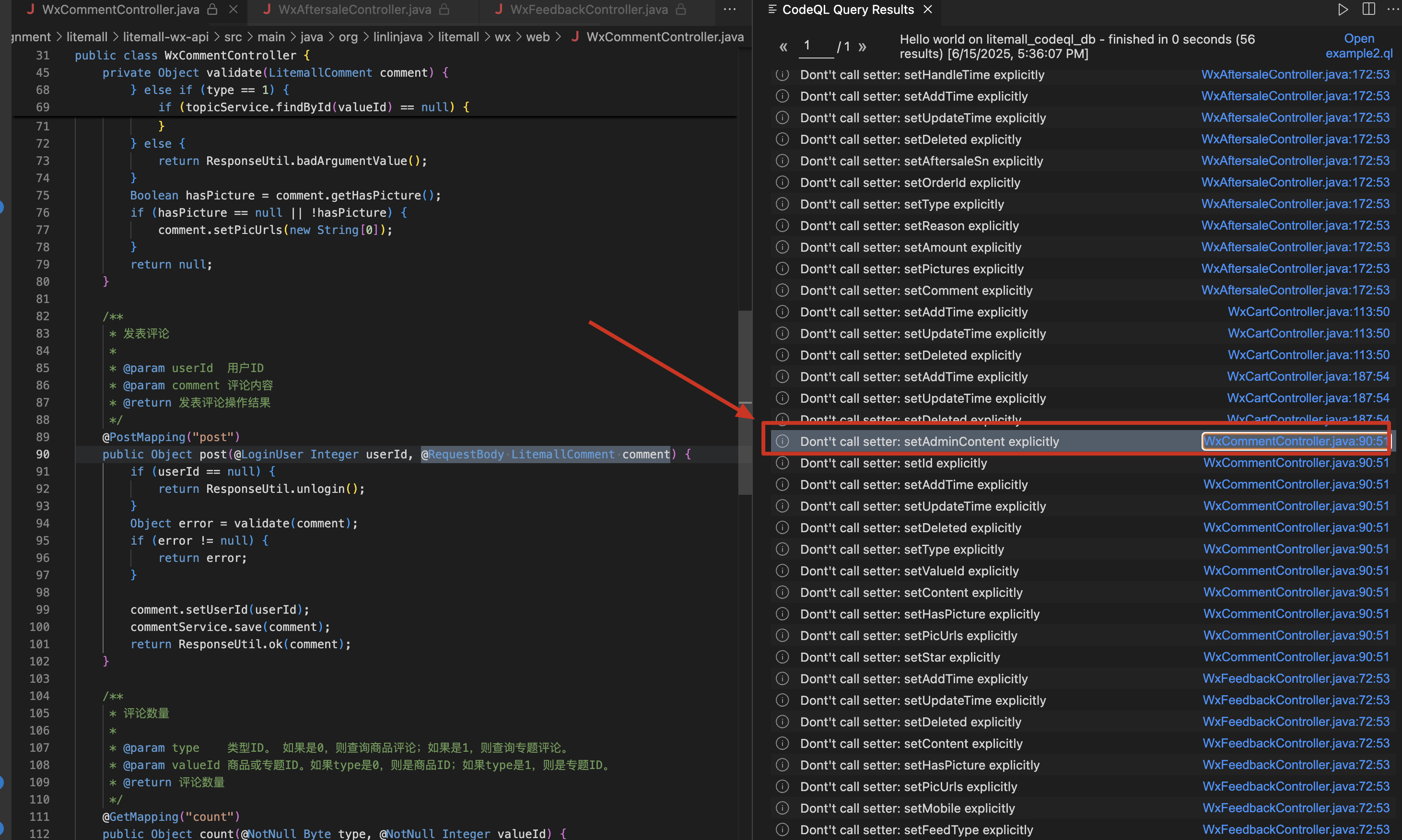
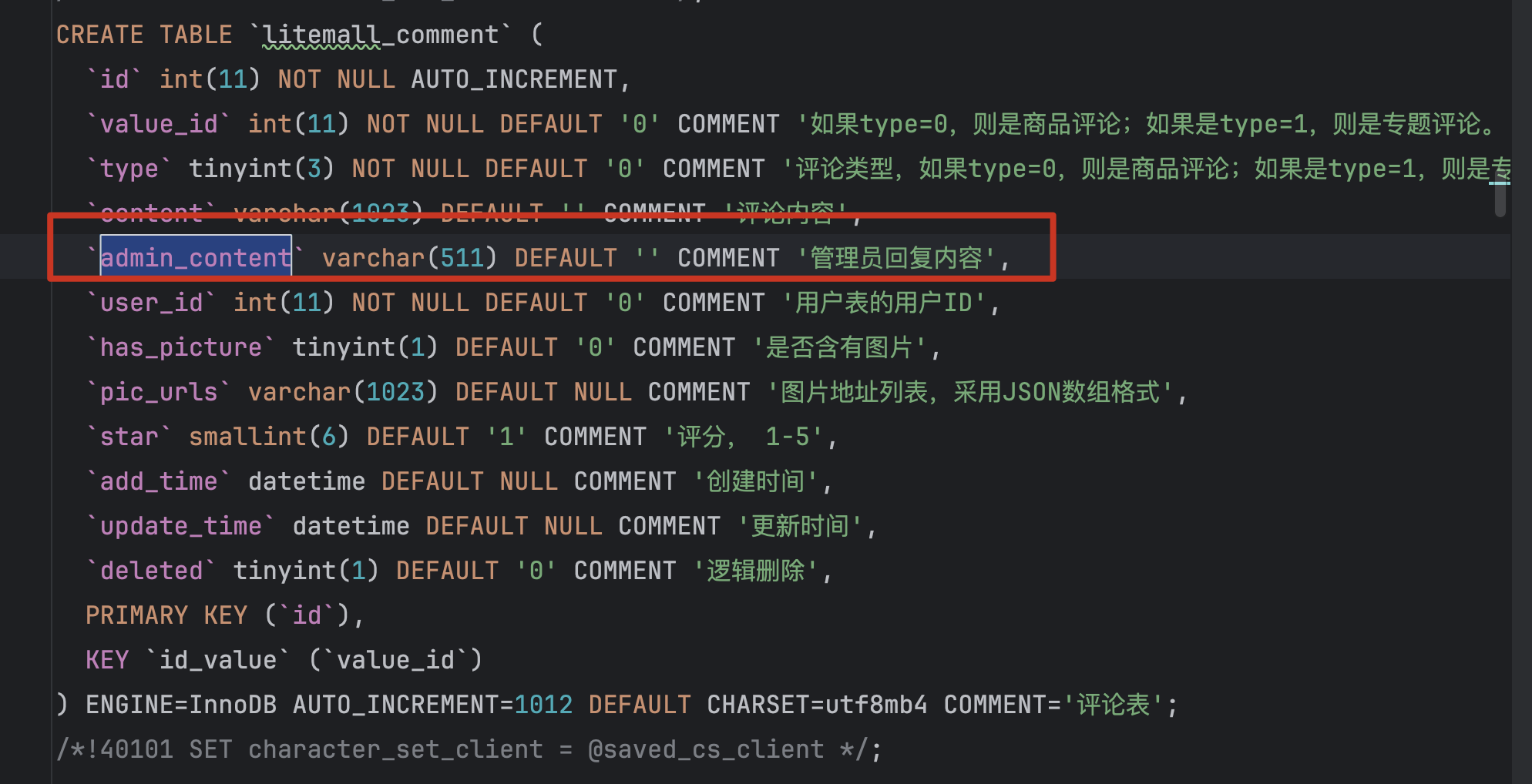
其次,该项目中还发现多处存在未显示调用 setDeleted 方法,这允许用户自删除自己的评论/数据,应该没有用户无聊到通过大量赋值来“删除”自己的数据吧。
最后完整的CodeQL查询语句:
/**
 * This is an automatically generated file
 *
 * @name Hello world
 * @kind problem
 * @problem.severity warning
 * @id java/example/hello-world
 */

import java

class RequestbodyAnnotation extends Annotation {
  RequestbodyAnnotation() {
    this.getType().hasQualifiedName("org.springframework.web.bind.annotation", "RequestBody")
  }
}

predicate daoClass(Class c) {
  c.getPackage().getName() = "org.linlinjava.litemall.db.domain" and
  c.getName().matches("Litemall%")
}

class BodyParameter extends Parameter {
  BodyParameter() {
    this.getAnAnnotation() instanceof RequestbodyAnnotation and
    daoClass(this.getType())
  }
}

class SetterMethod extends Method {
  SetterMethod() {
    exists(Class c |
      daoClass(c) and
      this.getDeclaringType() = c and
      this.isPublic() and
      this.getName().regexpMatch("set.*") and
      this.getNumberOfParameters() = 1
    )
  }
}

import semmle.code.java.dataflow.DataFlow
predicate serviceClass(Class c) {
  c.getPackage().getName() = "org.linlinjava.litemall.db.service" and
  c.getName().matches("%Service")
}


class GetterMethod extends Method {
  GetterMethod() {
    exists(Class c |
      daoClass(c) and
      this.getDeclaringType() = c and
      this.isPublic() and
      this.getName().regexpMatch("get.*")
    )
  }
}


from SetterMethod allSetterMethods, BodyParameter requestBodyParam
where
  requestBodyParam.getType() = allSetterMethods.getDeclaringType() and
  not exists(MethodCall explicitCall |
    explicitCall.getCallee() = allSetterMethods and
    explicitCall.getQualifier().(VarAccess).getVariable() = requestBodyParam
  ) and
  exists(MethodCall call |
    serviceClass(call.getQualifier().(VarAccess).getVariable().getType()) and
    DataFlow::localFlow(DataFlow::parameterNode(requestBodyParam),
      DataFlow::exprNode(call.getAnArgument()))
  ) and
   not exists(GetterMethod getterCall, MethodCall explicitCall |
    daoClass(getterCall.getDeclaringType()) and
    explicitCall.getCallee() = getterCall and
    explicitCall.getQualifier().(VarAccess).getVariable() = requestBodyParam and
    getterCall.getName().replaceAll("get", "set") = allSetterMethods.getName()
  ) and
  not requestBodyParam.getFile().getAbsolutePath().matches("%admin-api%")
select requestBodyParam, "Dont't call setter: " + allSetterMethods.getName() + " explicitly"
Reference
https://owasp.org/API-Security/editions/2023/en/0xa3-broken-object-property-level-authorization/ https://portswigger.net/web-security/api-testing#mass-assignment-vulnerabilities
https://codeql.github.com/docs/codeql-language-guides/codeql-for-java/